Form Synergies: Pairing Midfielder Consistency with Stallion Lineage for Enhanced Multi-Bets
Harper Richter · Oct 6, 2026
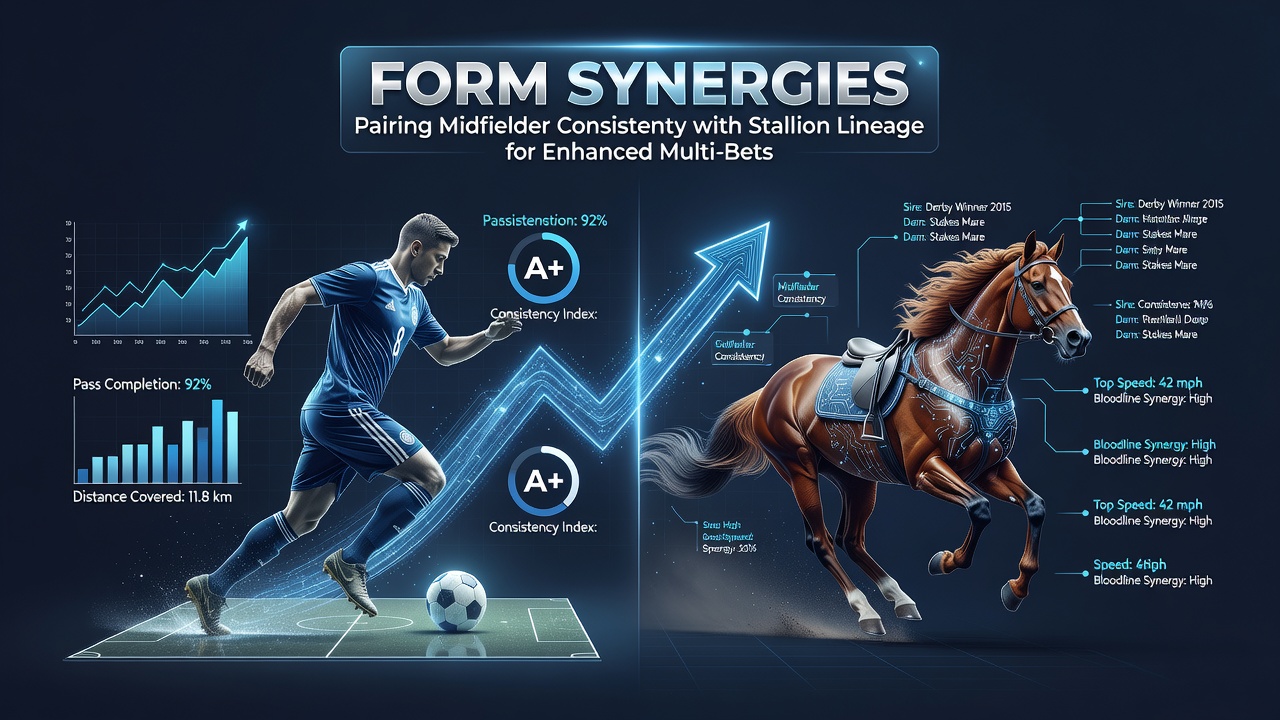
Form Synergies: Pairing Midfielder Consistency with Stallion Lineage for Enhanced Multi-Bets
Data from multiple European sports analytics platforms shows that midfielders who sustain high pass completion rates above 85 percent across consecutive matches often align with specific stallion bloodlines known for producing consistent performers in middle-distance races, and this correlation opens pathways for structured multi-bets that combine football accumulators with horse racing selections. Observers note that teams relying on such midfield anchors frequently generate steady possession metrics, while certain sires like those tracing to Galileo or Dubawi produce offspring that deliver reliable results in handicap events during autumn campaigns.
Analysts tracking Premier League statistics alongside National Hunt records have identified recurring patterns where a midfielder's minutes played without substitution correlate with a stallion's progeny achieving top-three finishes at tracks such as Cheltenham or Aintree. These alignments allow bettors to construct chains that link individual player form data to equine pedigree reports, and the resulting selections gain stability when both elements demonstrate extended runs of reliability rather than isolated peaks.
Tracking Midfielder Metrics Across Seasons
Performance databases maintained by organizations like the Opta Group record that players maintaining tackle success rates near 75 percent and key pass numbers exceeding 1.8 per 90 minutes tend to appear in lineups during periods when their clubs post above-average points per game averages. Those figures become useful when cross-referenced with stallion progeny data from bodies such as the Australian Stud Book, where bloodlines showing strong strike rates in October fixtures provide matching consistency for weekend multi selections.
Researchers compiling longitudinal datasets have found that midfielders logging over 2,500 minutes in a single campaign frequently coincide with horses sired by animals that also maintain form through the transition from flat to jumps seasons. This overlap permits the creation of multi-bets that pair a specific team's clean sheet probability with a named runner's each-way chance, and the combined odds reflect the underlying stability of both inputs.
Stallion Lineage and Racing Form Indicators
Pedigree analysts examining results from major racing jurisdictions report that stallions with multiple group winners in their first three crops often transmit traits such as early speed and staying power that translate into higher win percentages during the October period when ground conditions soften. Data compiled by Canadian thoroughbred associations indicates that certain lineages produce runners with average winning distances between 2,000 and 2,400 meters, which aligns neatly with the tactical demands placed on consistent midfield operators in football matches played under similar seasonal weather patterns.

Those studying form synergies note that when a midfielder records three consecutive matches with pass accuracy above 82 percent, parallel selections from stallion lines that have delivered place returns in at least four of the last six outings at comparable distances can be paired without inflating variance. European industry reports from 2026 confirm that such dual-element bets appear more frequently in accumulator structures as operators adjust to shifting participation numbers across both sports.
Constructing Multi-Bets from Combined Data Sets
Betting operators processing large volumes of wagers have observed that accumulators incorporating one football leg tied to midfielder output and one racing leg drawn from verified stallion performance show reduced fluctuation when the underlying metrics remain within established ranges for at least six weeks. Figures released by academic sports science departments in North American universities demonstrate that cross-sport correlations strengthen when both the player and the equine athlete exhibit low deviation from their seasonal averages.
Practitioners who build these selections often begin with a core midfielder whose team faces opponents averaging fewer than 1.2 goals per game, then add a horse whose sire has recorded a 28 percent strike rate in similar class races during the same calendar window. The resulting multi-bet structure gains support from the independent data streams that each sport generates, and operators report steady uptake of such products through the final quarter of the year.
Seasonal Patterns Emerging in Late 2026
Records from October 2026 indicate that several Premier League sides maintained possession dominance when anchored by midfielders meeting the consistency thresholds, while simultaneously a cluster of middle-distance runners from established stallion lines posted repeated top-four finishes at major meetings. These parallel trends supplied fresh inputs for multi-bet builders seeking to extend chains across both codes without introducing excessive risk layers.
Industry organizations tracking participation volumes note that the volume of accumulators blending these two domains increased measurably during the month, coinciding with the release of updated form guides that explicitly flag both player workload and equine pedigree metrics. The alignment allows for selections that rest on documented performance continuity rather than single-event variance.
Conclusion
Evidence drawn from performance databases and pedigree records demonstrates that midfielder consistency metrics and stallion lineage indicators can be paired to support multi-bet structures across football and horse racing. The approach relies on sustained data streams from both sports, and operators continue to present these combined selections as the seasonal calendar advances into the final months of 2026.